Category: Writing Mechanics

  • In the Time of Plague

    In the Time of Plague

    It’s been a couple weeks since I’ve written a blog post, and a treacherous ten days of deciding whether to feed or starve this cold or flu, whatever it is. And it’s been eight days since I’ve had the presence of mind to compose anything at all.

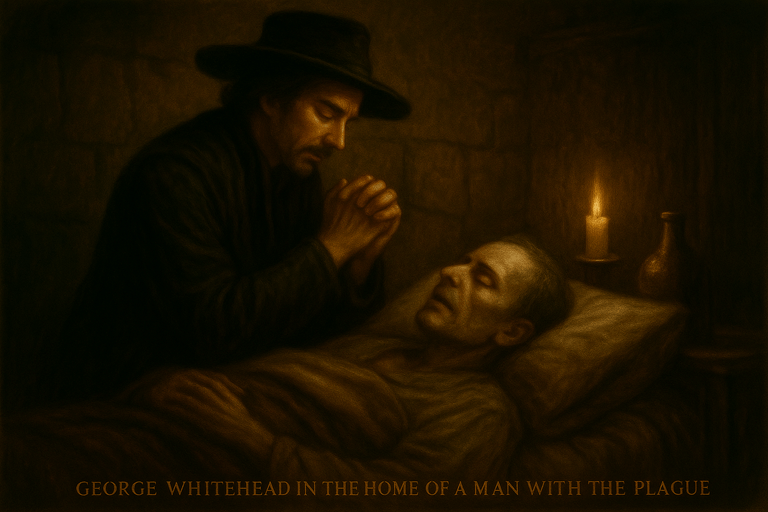
    As it happens, it is also time to be thinking about The 1665 Plague of London, a sequel to The Great Plague and a perfect driving force to whip up my story arcs and throw a little danger in the mix.

    Not that I need danger, I think as I blow my nose and grab another hand full of tissues, because my Quaker characters are living in a police state at this point, moving in and out of jail, fighting the good fight and so on. What I really need is to make it sound compelling, to put the reader there in the midst of it all.

    I had threatened to quit in my last blog entry, for lack of time to write. Then as our own mini plague set in at the Lawrence residence I had time to write while Eddie was sleeping late, recovering. I was suddenly inspired with the idea to do what I’ve always done as a reader–skip to the end and see how things go. Sure enough, the scene where Thomas Lightfoot escapes certain death while the prison billows into a conflagration around him was just the ticket. Even when he was up and about Eddie was more help than hindrance with his experience as a firefighter and interest in getting the technical aspects of the scene correct.

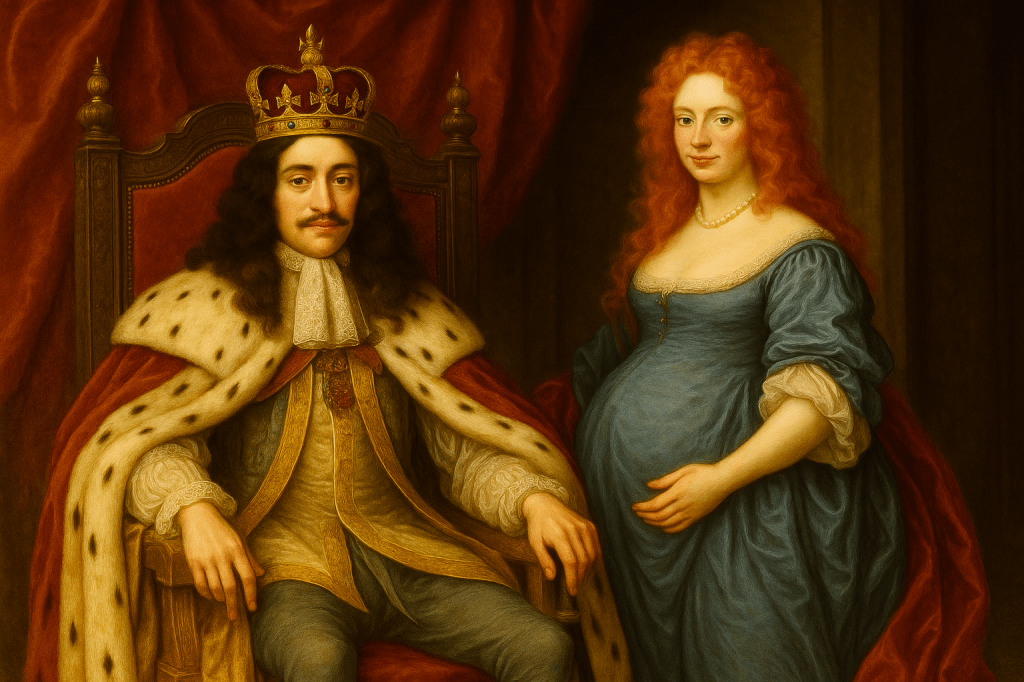
    I still have to go back and write the scenes of Charles II’s public and private marriage ceremonies, which promises hours of painfully deep research. Oh if it were only true I could get ChatGPT to write it! But then it would be full of anachronisms.

    In time it will get done. And that will be Part II, the goal of 100,000 words met, and my story only 2/3 complete.

    Sigh… I need to go lie down again.

  • The Monster Within

    The Monster Within

    I recently saw on a history program that Frederick Douglass had a “thinking cabin” the family called The Growlery. One can imagine him stomping straight to his cabin at the end of a hard day in politics and growling away at the walls. He was like so many brilliant creators who have been known for their tempers, especially when they needed privacy to create.

    So I was not surprised to hear this, but I was incredibly jealous. A cabin to go to, and people leave you alone.

    Sometimes I want to scream, “LET ME WRITE!” but my daughter keeps bringing these absolutely delightful foster grandchildren to the house and they can’t be denied. As Bluey teaches us, there will always be another time to watch a game…or to do the actually important things Mum and Dad must do. Ok not really a fan of the spoilt children show, but I do see that there is only a short window of time for toddlers and it must be cherished. Though I did admit the other day I chose writing time over Grandma time.

    And I actually feel a bit bad about that choice on that day, because so far, the folks who promise to read my Chapter 1 (I never ask for more–let Chapter 1 do the heavy lifting of enticing readers if it can), never offer any feedback. Except my sister, who decided to start editing it and then got too busy. Which is probably for the best.

    But as I also mentioned in my Writing in Absentia post, I have a whole 17th century universe in my head. It is an accumulation of researched facts that begs to be shared, and a budding love story, a boy in prison, changes in dynasties, and new worlds, and so on! GAH!

    I did have a desk once. As the primary income earner working remotely, there was always an office somewhere as we flipped our way through houses. But then I retired and I gave away my desk. Instead I’m writing from the comfort of my recliner with a lap desk. The cat tries to worm her way in between me and my laptop, but we have developed a deal where she gets her attention at 4pm. Or did.

    And I say these things in past tense because now I have stopped writing. Period. I am attempting to shed myself of my own love story with my book and my characters, and focus instead on the children and on spending my time with my husband (who to be fair just had a scary thing happen with his heart). And let me be clear for your commiseration that spending time with the hubby means endless hours of television or running errands. Frederick Douglass would have gone mad.

    The creators of Bluey are right; I will not end my days wishing I’d written more. Well…unless somebody reads my Chapter 1 and says, “Oh my gosh this is an incredible story–when are you going to finish it?!” Which might be my dream or my nightmare at this point.

    I must tell you, though, that there is a monster within me, and it’s bloody well uptight.

  • Writing in Absentia

    Writing in Absentia

    When I started this journey, I was able to take advantage of a 9-week stay of marital execution. By which I jokingly mean, my husband was in England with his family and new grandson for a couple months and I was free to favor the execution of my work as a writer over my duties as a wife.

    As a result, Part I of this work flew by like a breeze, just me and ChatGPT-4 whistling while we worked.

    Back then, I would turn off the TV at 9am and write sometimes for the next 12 or 14 hours. At one point I completely forgot to attend a potluck until two hours after it ended. Fortunately I had put my ice cream cake in the church freezer the day before.

    Today, four weeks after Eddie’s return, my work has slowed to a crawl. Not all his fault. I have posted about my difficulties with Charles II and all the intricacies of his court, as well as the need to press the pause button earlier this week as I sought additional information.

    I believe what I was supposed to pause for was this: I had begun my written portrait of Charles II by having him followed into the great council room by a band of hangers-on, like a Leonardo DiCaprio posse. But as I watched hours of historic videos about Charlie 2, I realized the premise I have been following–that George Whitehead had an impact because his intelligence appealed to the king–would have been true of everyone the king surrounded himself with.

    That means, if this king had a posse, the least of these had better have some good witticisms to share. And more to the point, as I realized in the middle of the night recently, his mistresses would not have been air-heads either. So off I went to Google the next morning and yes, Barbara Villiers was a very bright woman who ran the palace (even with Queen Catharine there) for a decade. She was instrumental in the decision to sell the French port of Dunkirk back to France, mainly to support her lavish lifestyle.

    Even more influential was his next dalliance with the French noblewoman Louise de Kérouaille, who had a foot firmly in the household as a lady in waiting to the Queen. Louise acted as a French spy, influenced Charles in ways that would be advantageous to her country, and blatantly sold access to him. It reminds me of those stories you hear about pop stars whose lives are run by someone who gets close to them. I’m sure you can think of modern examples.

    So my task in the last couple days has been to understand those who were not in positions of authority, but who had access to King Charles II, and then to reimagine a scene where an intelligent woman inserts herself even in the Privy Council. The only problem is…I’m back to being half of a partnership. One in which we are flipping properties in an attempt to gain a foothold in an ever more inaccessible housing market. We’ve managed to purchase a property with a trashed-out mobile home an hour outside Raleigh.

    That means long drives to submit permits and arrange utilities. Luckily I didn’t have to be there to watch the destruction of the trailer and subsequent brush clearing. Although as a good wife I did have to watch the videos and respond with encouragement.

    After errands today I managed to get back to my story just before 2pm. An hour later Eddie asked if I wanted to go spend time with the kids. Not to be a bad grandma, but honestly, there is an entire universe in my brain. One with a boy starved and starving himself in prison, our young hero George Whitehead arguing compassion and human rights in the middle of a century that was tussling over the direction the Protestant Revolution should take humanity, and a wild and crazy king who was leaning toward religious freedom for his own secret reasons.

    So my response was…no.

    I asked Google for a good writer’s joke. Here’s what I got: “If you need me, I’ll be in another world for the next few hours. Don’t worry, I know the way back…mostly.”

  • The Restoration’s Lash

    The Restoration’s Lash

    November, 1660

    A hard wind blew dry leaves against Whitehall’s towering windows. Inside, beyond the heavy oak doors that guarded the entrance, the long corridor now shone with newly-polished marble columns and flickering sconces. It was no longer the plain, functional passageways of the interregnum, but instead a procession of grandeur restored—walls hung with tapestries depicting the Tudor rose and Stuart lion, gilded frames containing portraits of monarchs past staring down like silent sentinels. Chief among them and most prominent was Van Dyck’s portrait of Charles I with his family, a declaration in itself.

    The floor was laid with a carpet woven in deep reds and blues. A close inspection might reveal places where it was worn thin by decades of shuffling feet; however with a trade war yet raging, now was not the time for such repairs.

    Footsteps echoed ahead; Charles Stuart with sure tread made his way with attendants in tow, passing beneath the portrait of his father. The light was fading, pale through the high windows and throwing long shadows that mingled with the golden candlelight that already burned in heavy brass chandeliers. There was a sense of power still unsettled; haunted by years of exile.

    The group entered a chamber at the far end of the hall; the monarch’s chosen place of meeting, as it had been for those who came before him. The chamber where the Protector once sat in plain buff coat was now half-filled with disused trunks and moth-eaten hangings.

    Two members of His Majesty’s Privy Council had convened to bring news and discuss the unrest still simmering beneath the surface of his restored realm. The door was flung open, revealing a room both sumptuous and commanding.

    Inside, a long table of dark oak stretched between two banks of windows, each pane bordered with lead and diamond-cut glass. Heavy curtains were drawn aside, revealing the Privy Gardens, now reeling from the winds that cruelly tore the leaves from carefully cropped branches. Charles took note as he entered, always the botanist.

    He passed walls hung with rich tapestries, their threads catching the candlelight in a way that made the images shimmer—scenes of English victories and royal triumphs, of kings crowned and realms united. A vast fireplace carved with heraldic lions and dragons dominated an entire wall with a fire that crackled and spat to life. Charles made his way to the windows, remembering again the years he had enjoyed this same view—though it was very different now.

    He watched as the wind came in gusts off the Thames, driving spray against the stone and sending dead leaves swirling across the neat lawns. The trees bent and twisted like supplicants in some ancient ritual. Charles seemed for a moment less a king restored than a gentleman of leisure gauging the temper of the elements.

    A light cough behind him advised that he was expected to take his seat in the grand chair at the head of the table—a throne of carved oak, gilded with gold leaf, the arms terminating in fierce lion heads that seemed to leer at the gathered men. To the right of it Edward Hyde, Lord Chancellor, stood expectantly in heavy robes and powdered wig. He was man whose sharp eyes missed nothing. His voice carried the cool authority of law hardened by years of political survival.

    Opposite him stood with rather more impatience John Maitland, Duke of Lauderdale, a soldier and politician both, his bearing lean and intense, his gaze restless and calculating. He was a man used to command, used to pressing advantage, and well acquainted with those who sought to challenge the status quo.

    The Chancellor leaned slightly. “It is a fine prospect, Your Majesty. But even the neatest garden will not withstand a winter such as this promises to be.”

    “You would be amazed at the strength of such trees,” Charles replied, gesturing toward the embattled yews. “Left alone, they would overrun every wall and path, as with our Roman ruins—still standing after fourteen centuries—our present craft can scarcely match the old strength. The masons of England have chased Roman concrete for generations, yet even now we build with envy.”

    He turned and sat, his voice carrying a hint of amusement. “They tell me Cromwell had the gardeners mending these grounds for months, then locked the gates to all but himself—the old Puritan fox. I mean to open them again—when the treasury can bear the cost. And perhaps a sundial I have in mind that will tell far more than the day’s time,” he added, one brow arched, “to remind our people that the House of Stuart holds a finer command of science than any commonwealth could boast. Cromwell, for all his sums and calculations, was a mere dabbler.”

    The king’s mind, like his forebears’, ran to instruments that marked not just the hour, but the harmony of the heavens themselves. “But that will wait,” he said, “until the kingdom’s debts are stanched and the accounts stop bleeding like a bad wound.” He settled into his chair, and despite the magnificence surrounding him, the king’s posture was cautious, almost tentative, as though the weight of history pressed upon his shoulders more than the soft velvet and ermine could conceal.

    Hyde cleared his throat, breaking the silence with a hint of wryness.

    “Your Majesty, I spoke with Mr. Pepys recently. You recall, the diligent clerk who accompanied your return from exile?”

    Lauderdale grunted. “Pepys says the weather of this century is worth noting in his diary. Records the temperature as though it were a state paper.”

    “Aye,” Charles chuckled, “and I like him for it. Pepys is no sailor, yet we have given him the Navy. He asks what others are too proud to ask—and that may save us from another Dutch humiliation. He tells me he has lately tried a tea from China that was quite extraordinary.”

    This brought a smothered laugh from Lauderdale. “Then he has not travelled as we have. Your interest in Portugal made us well-acquainted with their fetish for this China tea.”

    Hyde added, “One would think his sailors would have told him, for they claim it warms the body against biting winds.”

    Charles’s mind turned. “And what of your meeting? Tell me of the marriage.” His eyes darkened with calculation. “It is our hope this agreement cools the fires of dissent in our midst.”

    The Chancellor inclined his head. “It is all but sealed, sire. The treaty is signed, though the formal ceremonies await the spring. Still, the agreement binds us now. A useful alliance, strengthening our hand against Spain and France alike.

    Maitland added, “She brings not only a dowry but ports—Tangier and Bombay—gifts that expand England’s reach and influence.”

    The Lord Chancellor’s tone shifted, his fingers tightening on the desk. “And yet, Your Majesty, not all fires are quelled by marriage. If we are ready for our next business?” As both nodded, Hyde continued, “We have petitions from the ‘Georges.’”

    His majesty groaned. “These Quakers! Queen Elizabeth would have swept them from the realm before they’d learned to call a meeting.”

    Again, the unfortunate Chancellor coughed, and the duke nearly asked if he was suffering from cold. But Hyde continued, “There is another petition, quite similar, from Lady Fell. Both speak of change with quiet but firm conviction.”

    Maitland’s gaze hardened. “They may say they seek peace ‘quietly,’ but their refusal to bend threatens the order we are charged to preserve. As for this woman, she is a known trouble-maker. Entertains the heretics at Swarthmoor all the more now her husband is dead.”

    Charles shook his head. “Has her son no spine to bring his house into order?”

    “Thomas Fell left the house and grounds to her, to prevent marriage with one of these dissenters. It was to preserve the family, though an ill choice to my mind.”

    At this the king turned fully, unfolding the petitions deliberately. “Then let us give our answer speedily, for I fear she will gather all the women of the gentry to her bosom lest we act with authority for the realm’s peace, and for the Crown’s future. We hardly need another dissenter to overtake these grounds.”

    The wind gave a sharp knock at the windows, as if to punctuate the thought, and the king looked at his two advisors expectantly.

    Hyde was first to reply, his voice a rasp like dry parchment, “Sire, the chief difficulty is that these petitions are brought for as in humility, yet the very words strike at the root of our Church and Crown, threatening the very order that holds this realm together. You are correct; to permit such dissent unchecked invites even greater chaos than the last reign’s failings.”

    Lauderdale nodded sharply, eyes hard. “They refuse oaths, spurn the militia, reject lawful authority. Their meetings disrupt the peace. This faith is but sedition in disguise.”

    Charles sighed impatiently. “Yes, yes, all are agreed. What is your counsel?”

    With a gaze sharpened with resolve, Hyde set forth the plan he had been crafting since Cromwell’s death. “The Corporation Act, Your Majesty. Soon to be presented to Parliament. It will secure municipal offices for those loyal to Church and Crown, requiring oaths that exclude these recusants. Constables under the old regime held sway, but many proved timid or corrupt. This law ensures municipal authority remains steadfast and uncompromised. Their influence will be curtailed; their gatherings suppressed by law.”

    Lauderdale’s eyes darkened. “The militia must be ready to quell disturbances swiftly and decisively. Constables alone cannot withstand the uproar—those howling sectaries, disrupting worship and irritating ministers and magistrates. Nor even the ministers and magistrates inciting mobs against these Quakers. Let us be clear–loyalty is not a matter of convenience but an unyielding allegiance to King and Church alike. But above all we keep the peace.”

    The king considered his council, voice steady and firm. “Let the law bind all subjects equally. None may claim conscience as a shield from obedience. Disorder will find no refuge in these realms.”

    The chamber quieted, the candle flames flickering like watchful eyes as the weight of the decision settled. Outside, the wind whispered through bare branches, carrying rumors of unrest that would soon swell into storm.

  • The Part I Journey

    The Part I Journey

    Even with the help of AI lending a bit of Asimov grittiness to my text, this has been quite a research project. Who knew there was so much of today in the actions of the 1600s? Having attended a Lutheran church I’ve been aware of the Reformation, but the English Civil War and Cromwell and especially the Quakers…that was all new to me.

    I continue to add more layers even as I move forward to Part II. For example I only realized yesterday while talking with my daughter about tea and coffee that it was Oliver Cromwell and his Puritan ideals that brought us coffee. It was favored by the Jews, whom he protected (as Lord Protector), and also of interest to him—and not just because Puritans disliked beer being distributed to one and all (you couldn’t drink the water because it could kill you, so yes even the kids had weak beer or cider to drink). Cromwell suffered for years from malaria and gout and all kinds of fevers or agues. He saw coffee as a health drink, and it gave him a boost of energy. So I wrote coffee into the end of Part I.

    I also did not know until I looked it up that coffeehouses came into fashion around 1650 and had become salons where ideas were exchanged by the time of Cromwell’s death. So Part II begins in a coffee house. We’re also about to learn why the Brits drink tea! I love a good narrative that gives you all kinds of information bites along the way.

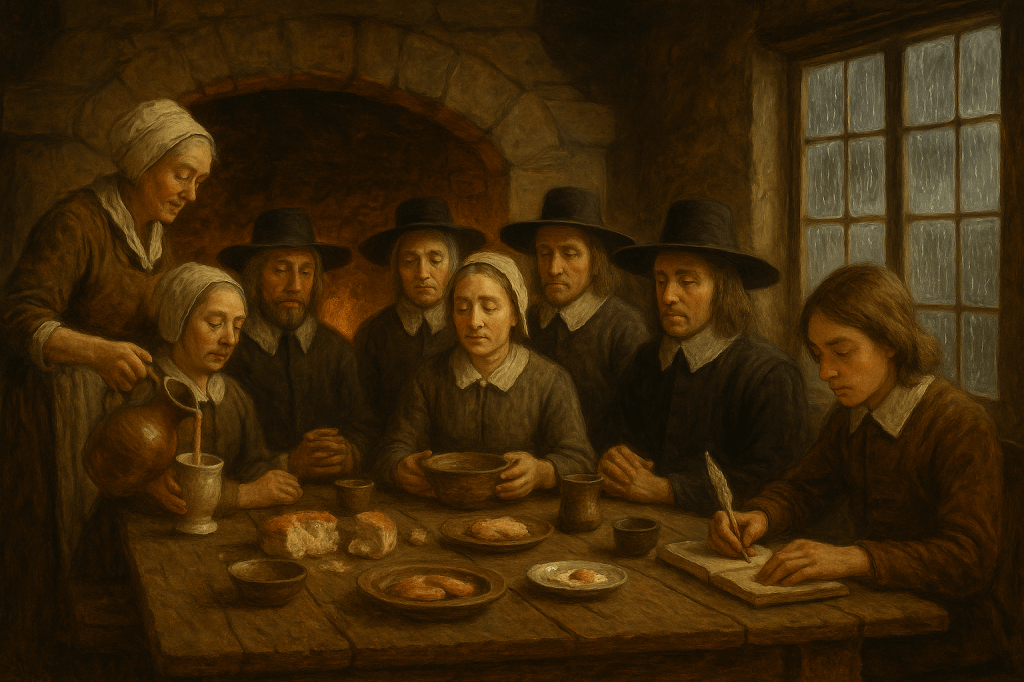
    Another thing I’ve wanted to write about regarding my Part I journey is that to get into the mindset of these young Spirit-filled activists, I decided to surround myself with a kind of “Quaker quiet.” And by that I don’t mean utter silence because I don’t function that way. I had heard a song by Sounds Like Reign some months ago, so I was drawn back there. I discovered on their YouTube channel and Notes from Home vlog a family that was part of a whole network of homeschoolers and YouTubers living a minimalist life. And although Bracken’s well-appointed workshop and equally awesome sound studio aren’t exactly “minimalist” in some aspects, it is a non-commercial life, plugged into God, not man. And that is where I sort of existed while the characters flowed from my keyboard into a noisy and disruptive world.

    And speaking of Disruptive, the Quakers were called to be just that. In our modern parlance we would think of people yelling, jumping, screaming, holding up signs not just to point out the wrongs of that society, but also pointing TO what was right. And in God’s good timing I happened upon Brackin’s recommendation to follow another homeschooling family, who produce the Jordan Michael Tuesday Show for their YouTube channel. Jordan does not wear plain garb, but he and his family give of their tremendous energy to teach Biblical truths through entertaining parables. So yes, Jordan Michael Tuesday is woven into my story even if there is little humor in it. There is disruption and a dogged hold on what is true and a tired perseverance even when it seems like people aren’t watching.

    And to that point, in this echo chamber with no followers even amongst my own family (at this writing), I remember that I am the follower of God’s voice and God’s leading. Maybe the time for this story to be made known will be after I’m gone. And if that is the case my job is to get it all out there and share the message God has planted within it.

    So there you go. Part I finished, two more to go. We shall see how George Whitehead and his compatriots bravely met with kings and appeared before Parliament, seeking relief for God’s people. What he could not know in the 1650s is what greater good will come of his efforts a century later in the form of the American Bill of Rights, and ultimately in the entire concept of liberty we espouse today 400 years later. This is inspiration for the rest of us to continue laboring at tasks that seem pointless or vain. We don’t know where God is taking this, but we trust and labor on.

  • Thomas Lightfoot

    Thomas Lightfoot

    I happened upon this story while researching my family tree in Ancestry. Although my efforts proved I am probably not related to Thomas Lightfoot, there are two very interesting pieces of evidence that when combined create a remarkable scenario.

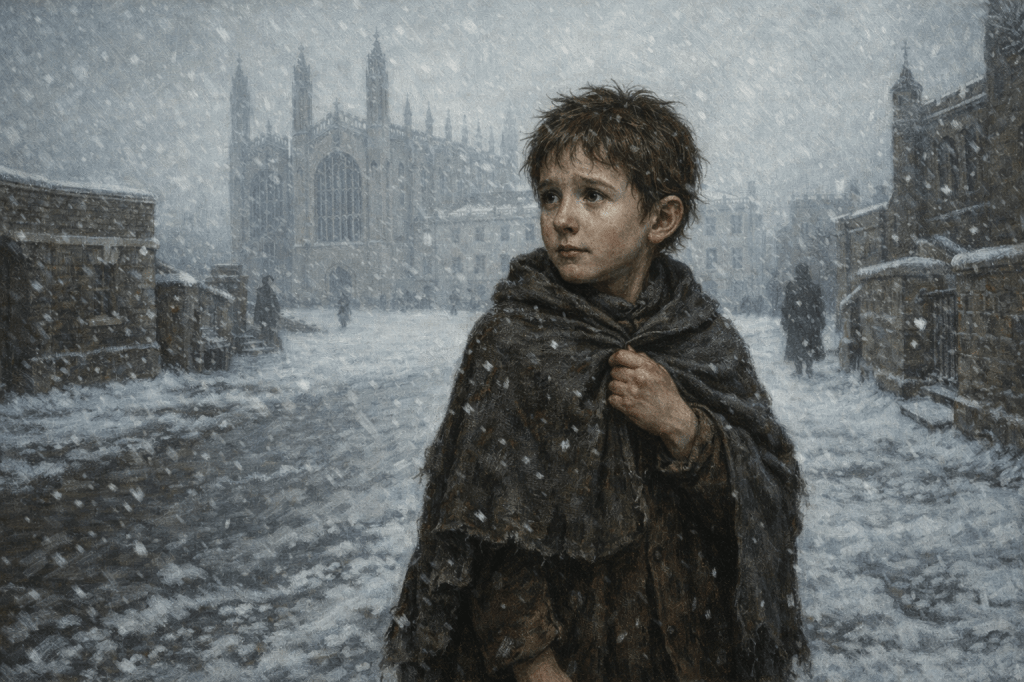
    First, we turn to a compilation of journal entries and remembrances by the noted Quaker George Whitehead, prepared just before his death. In this lengthy tome, he names many of those who were part of the early movement, as well as some who were decidedly not Friends. Early on, he briefly recounts a time when he was 17 years old, and how Thomas Whitehead had accompanied him in one of his first missionary journeys, how he had to compel an innkeeper to give them a place to sleep though it was snowing outside, and how their tiny garret was woefully exposed to the bitter cold.1

    What caught my attention is that the entry is brief and lacks the detail or the ire that would have come from a 17-year-old who writes well. It could be based on a fuller rant or a dim memory that comes up as a nod to the Thomas Lightfoot who is quite well-documented and was well-loved and respected both in Pennsylvania and Ireland, and active in communications with London when the book was published.2

    In fact, the funeral of this Thomas Lightfoot was noted by a Friend this way:

    “In the Ninth month, 1725, I was at the funeral of our worthy ancient Friend, Thomas Lightfoot. He was buried at Darby; the meeting was the largest that I have ever seen at that place. Our dear Friend was greatly beloved for his piety and virtue, his sweet disposition and lively ministry. The Lord was with him in his life and death, and with us at his burial.”

    So without a statement in the remembrance that the Thomas Lightfoot who accompanied George Whitehood as a teen was not in fact the Thomas Lightfoot known and loved by all, it seems likely to me that these are indeed one and the same persons. One historical society guesses the man of the early movement could have been Lightfoot’s father by the same name, but in such case the published narrative would surely have referred to him as Thomas Lightfoot the elder.

    The second fact that becomes downright astonishing is that in the year following this missionary journey, the Book of Sufferings by Joseph Besse records that a Thomas Lightfoot was sent to jail for stating “Jesus is the Word of God, not the Bible” even though he was basically quoting John 1:1. And he made this statement before the High Professors at Cambridge University, where Quaker activists (who like today’s activists were mainly in their twenties) had taken up the practice of interrupting lectures and challenging the very theologians responsible for training the clergy in the way they should go. Besse goes on to say that there were some who wanted Thomas killed.3

    I can well imagine this scenario, having read a few other stories mainly by Whitehead of how clergymen had tried to put him in prison and he was able to debate himself free. In fact, Whitehead was intelligent enough to gain meetings with several heads of state, in particular the brilliant Charles II (he who created the three-piece suit just to spite France).

    Let us imagine you are a frustrated professor who has heard complaints from clerics far and wide about these Quakers who want to end tithing, the economic force that keeps the theocracy in power. And yet you can’t seem to make headway against Fox, Whitehead and others like him. Having an unlearned sort pipe up with a bit of nonsense he barely understands would have been like an answer to prayer. Take this puny mascot and make an example of him. Anyone who has had a teacher who amused themselves by picking on the weakest person in the classroom would understand what I mean.

    And this leads us to the most remarkable part of the story. Because the well-known Thomas Lightfoot’s year of birth was “about 1645.” The fact that the year isn’t certain is testament to the Ancestry data that makes him motherless at four and an orphan by the age of eight, leaving him without a family to keep and remember his year of birth. All of which means that when 17-year-old George Whitehead went on that early mission, Thomas Lightfoot would have been an orphan of about nine years old.

    Now you have a story worth telling.


    1. The Christian Progress of That Ancient Servant and Minister of Jesus Christ George Whitehead, by George Whitehead, pub. 1725, p. 236 ↩︎
    2. https://www.wikitree.com/wiki/Lightfoot-54#_note-TheFriend ↩︎
    3. A Collection of the Sufferings of the People called Quakers Vol I by Joseph Besse, pub. 1753, pp 85-86 ↩︎