Tag: Quakers

  • The Coleman’s Son

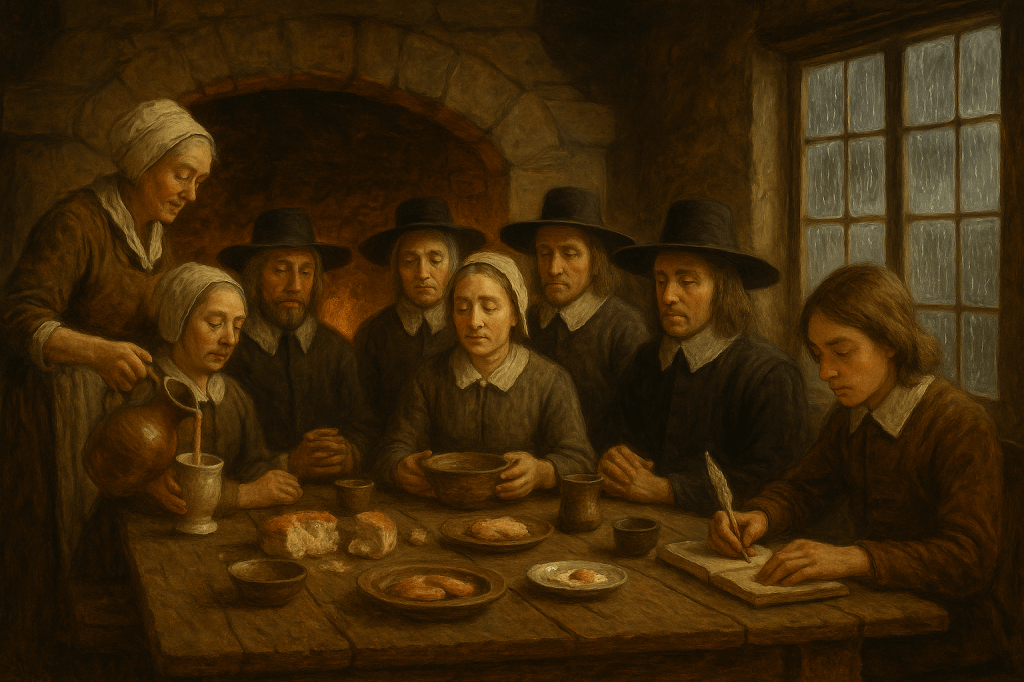
    It’s possible my tendency to geek out over historic trivia has overwhelmed my story. So in the interest of more “show don’t tell” I have developed this scene to replace the transcript from the list of Quaker sufferings at the beginning of my story. Dedicating this to my great-niece and fan of historic fiction, Serenity.

    The fog had lingered through the night and continued through morning, so that the streets were a slurry of mud and slime. Though June was nearly spent, the air stubbornly held an icy chill as it had for some time now. Only the oldest Englanders could recall a time when winter kept to its own season.

    Tom shuddered, his little hands pulling at a worn woolen coverlet that served as his cloak. He shuffled along the edge of King’s Parade, noting how his bare feet squelched on the cold wet stones. He had learned to keep his ears open and stay in the shadows, though he didn’t quite know what he feared most—the chill in his bones or the bustle of the scholars in their black robes.

    Cambridge was known to draw teens from from good families intended to study for a religious post that likely had already been set aside to secure their futures. To Tom it seemed these older boys took pleasure in adding to his torment now that he had neither father nor mother to protect him.

    The bells of St Mary’s rang across the sky, their peals muffled by the dense mist. He tilted his head, straining to catch any pattern, any meaning in the tolling that might guide him past the throng. Were they off to chapel or back to classes?

    At nine years old, Tom Lightfoot had seen more grief than any boy ought: mother long dead and leaving no memory of herself behind, and a year ago his father taken by black lung. Since then he’d been shuffled from one miserable orphanage to another, leaving him only dismal memories like faded candlelight.

    As he’d done before, he’d run from the latest house—not much more than a work-house—rather than join his brethren in the mines. Now with feet slick and mud-caked, he watched the square come alive with the presence of strangers. Two women moved with a quiet determination. The scholars took note with a rise in their scoffing tones that made him stop and press against a barrel, his small frame shivering not only from the cold but from anticipation of what was to come next. He hated the brutal spectacles that so many seemed to enjoy.

    Mary Fisher, not yet thirty, with a gaze that held fire without flame, and Elizabeth Williams, older, steady, her greyed hair tucked beneath a bonnet, threaded their way through the crowd. The air seemed to bend around them, fog curling past their skirts like smoke around a lantern. Tom crouched low to make himself invisible. His small heart thumped, loud in his chest, each step of the women over the stones seeming to echo like a drumbeat in his ears.

    The scholars on their side of the square clustered in stiff black robes with great wide collars. They spoke amongst themselves in clipped, precise tones. The boy could not follow every word, but the sense of authority, of hierarchy, struck him like cold iron.

    One boy, tall with a hawkish nose, said something about the “necessary guidance” the clergy must provide “to an uneducated populace unable to discern the true will of the Lord.” Another nodded, adding that those who had not studied Scripture properly must be shown the way, else chaos would descend. Tom’s ears caught the words and sifted them into fragments: uneducated people like himself, who could not understand beyond their station. Each phrase sounded like a verdict, like a bell toll for the common folk, and with a sinking feeling of despair he pressed his face further into the folds of his blanket.

    As the women approached the scholars crowed at them, for it was obvious from their attire that they belonged to a new sect, the “plain” folk who refused all adornment. Their heads were covered instead with simple white caps devoid of embroidery or trim. One of the young men asked loudly, “How many Gods do you suppose there are, oh wise Children of the Light?”

    The younger woman responded with a voice clear but not loud, unwavering in its confidence. “But one. Yet thou hast many gods and are ignorant of the true God.” Tom’s chest tightened in awe. The elder woman leaned close to her companion, her own voice a steady counterpoint. “And those who cannot read must not be left in ignorance. Our charge is to lift them toward Light, even if the world would see them in shadow.”

    Tom did not understand all they said, being a boy of narrow streets, but he understood enough: they spoke of hope, of defiance, of justice, in a language that warmed something deep within. The robed young men were in a fury—for none called them ‘thou’ except their mothers—and murmured among themselves in voices sharp and condescending, as though the women’s courage were a child’s trick. Tom’s small fists curled at his sides. If only he could speak, he would have shouted at them to hold their tongues, to listen.

    A sudden clatter—the gate at the edge of the square, or perhaps the falling of a barrel—made him flinch. The fog swirled and shifted, and for a moment, the world seemed magical and terrible all at once. Tom’s ears strained, and just then there was a great metal clang as the iron end of a constable’s staff slammed hard against the stone path. Syllables of the scholars’ speech blended with the clamor of the square as hawkers and shopkeepers joined the edges of the crowd to see what might happen next.

    “Constable!” shouted the hawk-nosed teen. “These women are preaching in the square, in spite of laws against such yammering.” What laws these might be they hardly knew, but assumption is ninety percent of the game.

    Another shouted, “Make a complaint to the mayor! Pickering will want to hear about this!”

    The constable stepped forward, a storm brewing in his brows as he approached the two women. The crowd parted like a river, and Tom’s stomach twisted. He could imagine the sharp, pointing fingers of the learned young men who would enforce order, and the sharp glistening eyes of enforcement that turned upon the women. “What’s this? Who are ye that ye come ‘ere to our peaceful town, eh?”

    The elder stepped forward defiantly and stated, “Our names are written in the Book of Life.”

    “Wha?? Where ye from then? And where’d ye stay the night last?”

    She would not bend, but responded only, “We are strangers. We know not where we huddled for a rest beside the road overnight. Under a tree somewhere. But the Light has drawn us nigh.”

    “The Light wants to know what’s yer husbands’ names is,” returned the constable, who grinned at the crowd now tittering along with the scholars. “I’ll warrant they’ll whip ye both if they have some sense.”

    “We have no husband but Him whom we serve, Christ Jesus.”

    With that he stepped forward and shoved the two, so that they nearly fell into the mud. “Right. Get on wi’ye. To Pickering ye’ll go.”

    Then like a circus parade the crowd followed the constable with his victims as he prodded them onward with his stave. Tom kept to the back, so that by the time they were in the mayor’s office he was obliged to listen beneath a window full of local gawkers. They narrated what they supposed was being asked and answered.

    “Aye, there he’s asked again who’s their ‘usbands.”

    “Has she called the Mayor ‘thee’ yet? That’ll make him right angry, won’t it?”

    And as if on cue there was a loud yell and a curse. Even Tom heard clearly the words from Mayor Pickering’s desk. “Whip them! Whip them until the blood runs down their bodies!”

    The listeners stepped back in shock so that Tom could jump up to the window and catch a glimpse. Both women had crumpled down to their knees and seemed to be praying. He hoped Pickering might have pity now.

    Instead he roared, “I need not your forgiveness! Get out of here both of you, and if I see you in Cambridge again I’ll see you die in prison!”

    An official then cried out for the executioner, and soon the entire party was off again down the path to the gallows where there a well-used whipping post awaited its next guest. Guards tore the women’s cloaks from them and tied them, one to each side.

    They held each other as they continued to pray—not for themselves, Tom noticed, but that God might forgive the executioner. This only served to incite his fury all the more. His face worked to such an extent that the boy hid himself again, for he feared what might happen next.

    The first crack of leather made him jump. He hid his eyes, but the sound was enough to mark him. Each whip across their backs was a thud in his chest, each prayerful word they uttered a cry through his bones. The fog, the mud, the bells—all blended into a haze of terror and awe. He dared not move. He dared not breathe. And yet he listened.

    Through the haze, he imagined the rhythm of the lashes, the snap of cruelty. Then the exhalation of courage came…in the form of a song. To the surprise of the crowd, both women were singing:

    “The Lord be blessed, the Lord be praised, who hath thus honored us and strengthened us thus to suffer for his Name’s sake.”

    The townspeople pressed closer and exclaimed to each other. Tom could not understand what it all meant. For him in that moment, the cruelty of the world was revealed in full: power, authority, law, and the tiny resistance of the faithful. He did not see everything; he had hidden his eyes. But each sound, each gasp, each sharp word burned into memory.

    When it was done, the women were led away, their clothing torn and stained, the street slick with muck now mixed with their blood. Tom crawled from his hiding place and followed as best he could, even now afraid of being seen. Yet he heard the women still speaking calmly and without fear, as if they were on their way to market. They encouraged all who would listen to fear God, not man. As they neared the city gate, Tom ran up along the wall to see them better.

    A well-dressed shopkeeper called out, “They are madwomen! Look how they sing psalms instead of weeping.”

    At this Elizabeth Williams stopped and said, “We are blessed to suffer for His name’s sake. And understand—this is but the beginning of the sufferings of the people of God.”

    The constable had heard enough. He pushed the two roughly outside the gate and into the mud. Without another glance at them he stomped over to the guard and explained the mayor’s commandment—the two were never to enter Cambridge again.

    Tom now reached the top of the gate and watched from above as the women helped each other stand. He could see they were shaking as they stepped to the side of the road to straighten their torn clothes. Just then, a shadowy figure above the parapet opposite him threw down a bundle. Mary quickly stepped over and picked it up before the guard might notice. When the two lifted their faces in thanks, there was none to bless. They turned then and saw Tom, who gave them a shy wave before ducking down below the parapet.

    Someone had helped them!

    He sat, hugging his knees with his eyes closed, thinking of his own life. From his earliest years he had been resigned to running errands and hauling coal with his father, then being torn from that life he had slept on the cold floors of the work-houses they called orphanages, weeping over his meager crust of daily bread. And now he lacked even that, for in his pocket was a tiny bite of moldy cheese found in a refuse pile. Yet by comparison he was rich, compared to the women he’d just seen.

    Here above the guttering lamplight he’d glimpsed courage, faith, and the possibility of choice. That day, he realized, the world was wider than his small life, and cruelty could be met with something even greater than defiance.

    He did not know it then, but the lash that fell on their backs had marked him too. The sound of leather against flesh, the cry of a soul standing against authority, the smell of damp and fear—all had etched themselves into his memory. And in that marking, something began to stir—a sense that when the time came, he would have to choose between obedience and conscience, between survival and doing what he knew to be right.
  • A Tip of the Scales of Justice

    A Tip of the Scales of Justice

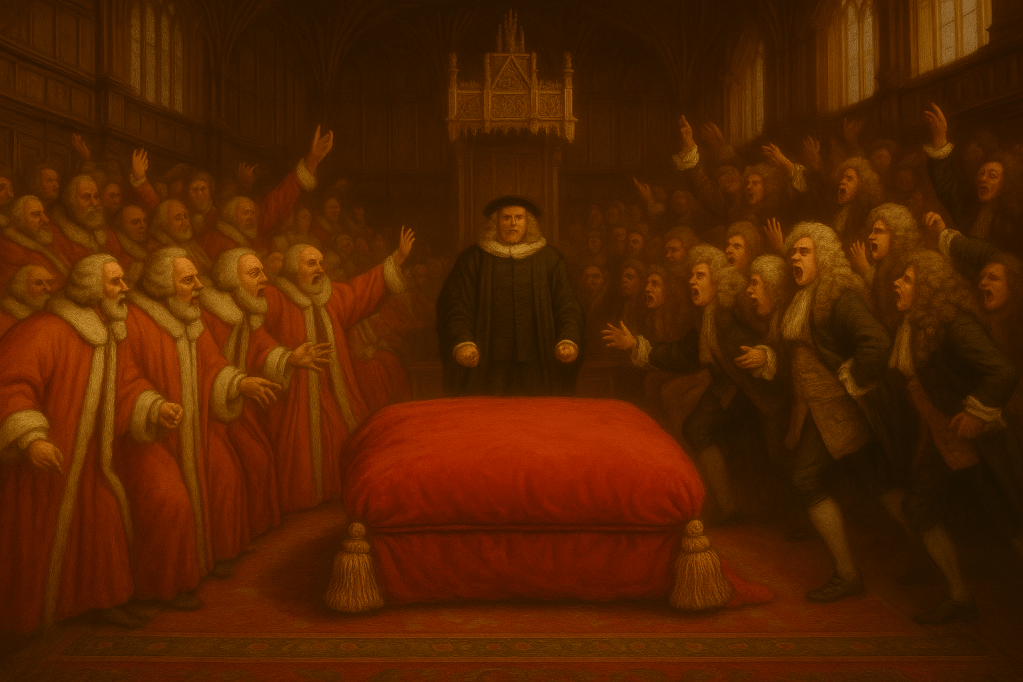
    Having finished with my introduction of Charles II and his courtiers, I have moved on to another research-heavy chapter: how the punishments for Quakers were ramped up by the House of Lords in spite of the King’s desire for tolerance.

    It has taken many hours of inquiry in the form of discussions with both Google and ChatGPT-5 about what the chamber looked like at the time, and the characters involved on both sides of the aisle, and of course a lot of writing and rewriting to get from the starting point of the King’s request to the ending legislation that created what amounted to a police state throughout England. The Quaker Act punished severely any perceived religious meeting of five or more people, and suddenly any thief or drunkard could lessen their fines by turning someone in.

    It helped that Eddie happened to watch a meeting of the House of Lords recently. I was shocked at the yelling back and forth and how it appeared to me like an undisciplined high school debate, sprinkled with calls of “Here-here!” and a great deal of booing and even the stomping of feet. So that had to be worked in as well.

    All of which brings to mind, as does every chapter and sometimes individual paragraphs, the similarities between those times and these. Turbulence. The will of the people, however divided they may be. The will of lawmakers. The will of the heads of state. How can there be peace on earth when there is a continual sense of dissatisfaction with the status quo and a desire to improve juxtaposed against the wealthy protecting their funds?

    As Christians, we are taught by the Bible to continually seek to be more like Jesus. To forgive seventy times seven, to love the unlovable including ourselves, to refrain from even calling anyone an idiot because in doing so we destroy them as a person. But there is also a desire within humanity for better, for more, for improvement of our personal circumstances. All of that is the individual stuff. Layer over that the call to improve our church body. And over that the desire of the clergy should they oppose us.

    And then this is where my eyes cross, because as a free person in a free country, I have always had the ability to just leave if I wanted. Imagine if your church was assigned, and the clerics above you were assigned, and you could not “wipe the dust from your feet” if you disagreed with them. I have said before that money was the issue and if you follow the money it pretty much stinks to see how the wealthy bishops used it. And this week I discovered how the bishops were squandering the hard-earned tithes of the people, by doling out livings to any who would support them in their careers.

    As a result of their legislation, there was a period when Quakers who threatened this way of existence were exiled to plantations in the American Colonies or the Indies.

    Once I complete my work on this chapter, the next one examines this police state and how even the mercy of the King could not save his subjects. And how some people cheered and others felt justice had been done. Sound like anything happening in our world today?

    I grew up with a generation of elders who had witnessed the worst in people, and who were proud to say that we, the people of the United States, had helped put an end to hatred and antisemitism. Imagine my horror to find that my generation should actually bear witness to its return. And that Christians of all kinds could have targets upon our heads.

    I’m not so sure this book is about Quakers or even about Spirit-filled youth. As God leads me through the story, it seems to be about how a society can be divided against itself and one citizen can turn against another, both believing they are in the right. And let us not forget the money that stokes the divisions.

    Thoughts on the matter? Leave a comment.

  • GPT5 and Now What?

    GPT5 and Now What?

    I can’t believe I gained followers because I mistakenly pasted a section of my latest chapter into a post. Like our little Quaker Tom, I am thankful for a prayer answered in a strange way, because I really have been asking for encouragement, and your follows have indeed encouraged me.

    That being said, I’m not so sure about posting chapters independently going forward because it seems like it would be hard to follow. Anyone with thoughts on the matter please comment.

    Meanwhile, I am facing a challenge that will surprise nobody—GPT5 is far less helpful than its predecessor. As I discuss in this video, ChatGPT was amazingly helpful when I started this endeavor and I was even a little concerned it deserved credit for doing a chunk of the work. But as I developed more content I realized that AI is still just a big encyclopedia compiling and spewing back the information that is already out there (inaccuracies and all). Even if it does so in the style of Isaac Asimov.

    At the same time, this is not like writing alongside a sane person. In my video I compared it to writing with a brilliant college Freshman, but one that is really not paying attention to what you’re trying to do. It doesn’t get humans at all.

    I have come to see AI as the tool that it is, like upgrading from a horse and plow to a tractor. The farmer doesn’t worry that he’s not giving enough credit to the tractor for his increased yield. Rather, he does the work of figuring out the tractor and reaps a fine harvest for his investment. But that was version 4. To carry on my analogy, it’s now as if I had a very serviceable tractor and someone took it away and replaced it with Jeremy Clarkson’s Lamborghini tractor. Which is maddening. [If you don’t get the reference, watch Clarkson’s Farm. Know the plight of the British farmer.]

    So now I am halfway through my book, and AI has helped me infuse my story with a glorious depth of Asmovian detail. Maybe too much at times, but if you want to be steeped in 17th century England, you’ll need to wade through some descriptive paragraphs.

    Although this may only be true for the first 50,000 pages, because my cohort is suddenly stupid, and not in a brilliant way. Or perhaps it’s now designed to be very unhelpful for authoring novels.

    Let me be specific. Whereas before I could ignore its last prompt to rewrite the prior passage with even more detail (and wiping away some really good prose in the process), and instead move on to another question about period or character development, the new version answers my every question by, yes, rewriting the last scene in a novel way. I can’t get it to move on. I am now on my third novel-related session because the first one can’t finish the graphic I requested, and the second one is stuck on the scene rewrites.

    Full disclosure…I am writing all of this without paying $20 for a month of the personal plan, so I suppose my next step is to pony up the cash and see if it helps. Although my hopes are not high because I’ve seen a number of complaints about 5 on X and Substack.

    Ok enough complaining. For those who are following along, my most recent work fills the gap between the two scenes in Under the Shadow of Persecution where I bring a now-sober Duffy back into the picture. This section also develops Tom’s religious character, as we bring him more in line with the Quaker-famous Thomas Lightfoot who emigrated to Pennsylvania in 1712. Let me know your thoughts!

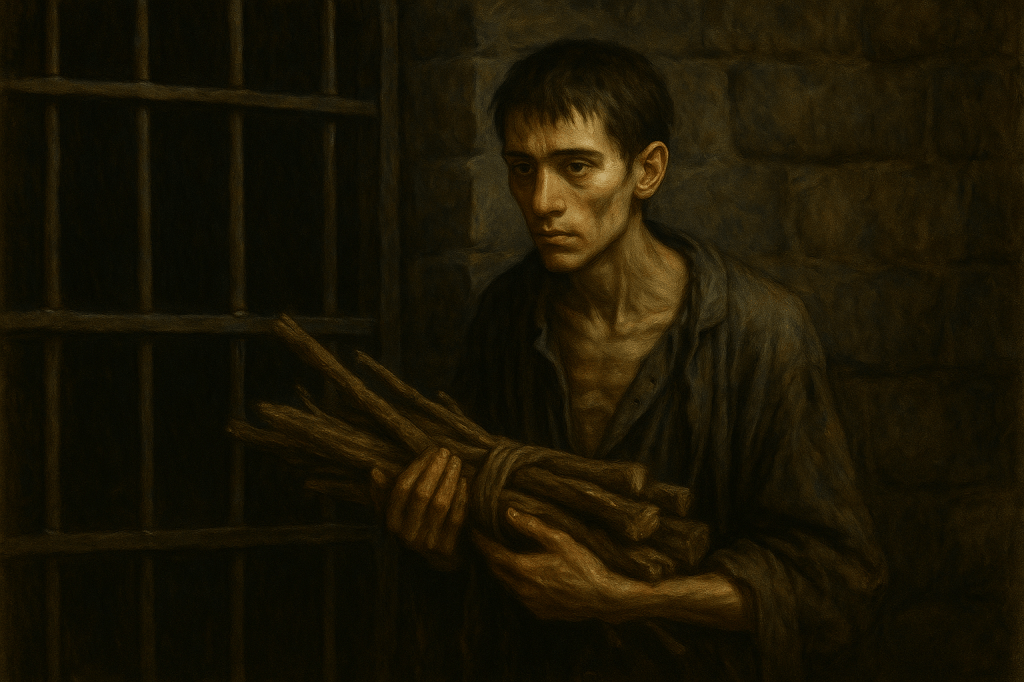
    [Picture by Sora, which admittedly builds far better graphics than the ones created in the chatbot]

  • The Part I Journey

    The Part I Journey

    Even with the help of AI lending a bit of Asimov grittiness to my text, this has been quite a research project. Who knew there was so much of today in the actions of the 1600s? Having attended a Lutheran church I’ve been aware of the Reformation, but the English Civil War and Cromwell and especially the Quakers…that was all new to me.

    I continue to add more layers even as I move forward to Part II. For example I only realized yesterday while talking with my daughter about tea and coffee that it was Oliver Cromwell and his Puritan ideals that brought us coffee. It was favored by the Jews, whom he protected (as Lord Protector), and also of interest to him—and not just because Puritans disliked beer being distributed to one and all (you couldn’t drink the water because it could kill you, so yes even the kids had weak beer or cider to drink). Cromwell suffered for years from malaria and gout and all kinds of fevers or agues. He saw coffee as a health drink, and it gave him a boost of energy. So I wrote coffee into the end of Part I.

    I also did not know until I looked it up that coffeehouses came into fashion around 1650 and had become salons where ideas were exchanged by the time of Cromwell’s death. So Part II begins in a coffee house. We’re also about to learn why the Brits drink tea! I love a good narrative that gives you all kinds of information bites along the way.

    Another thing I’ve wanted to write about regarding my Part I journey is that to get into the mindset of these young Spirit-filled activists, I decided to surround myself with a kind of “Quaker quiet.” And by that I don’t mean utter silence because I don’t function that way. I had heard a song by Sounds Like Reign some months ago, so I was drawn back there. I discovered on their YouTube channel and Notes from Home vlog a family that was part of a whole network of homeschoolers and YouTubers living a minimalist life. And although Bracken’s well-appointed workshop and equally awesome sound studio aren’t exactly “minimalist” in some aspects, it is a non-commercial life, plugged into God, not man. And that is where I sort of existed while the characters flowed from my keyboard into a noisy and disruptive world.

    And speaking of Disruptive, the Quakers were called to be just that. In our modern parlance we would think of people yelling, jumping, screaming, holding up signs not just to point out the wrongs of that society, but also pointing TO what was right. And in God’s good timing I happened upon Brackin’s recommendation to follow another homeschooling family, who produce the Jordan Michael Tuesday Show for their YouTube channel. Jordan does not wear plain garb, but he and his family give of their tremendous energy to teach Biblical truths through entertaining parables. So yes, Jordan Michael Tuesday is woven into my story even if there is little humor in it. There is disruption and a dogged hold on what is true and a tired perseverance even when it seems like people aren’t watching.

    And to that point, in this echo chamber with no followers even amongst my own family (at this writing), I remember that I am the follower of God’s voice and God’s leading. Maybe the time for this story to be made known will be after I’m gone. And if that is the case my job is to get it all out there and share the message God has planted within it.

    So there you go. Part I finished, two more to go. We shall see how George Whitehead and his compatriots bravely met with kings and appeared before Parliament, seeking relief for God’s people. What he could not know in the 1650s is what greater good will come of his efforts a century later in the form of the American Bill of Rights, and ultimately in the entire concept of liberty we espouse today 400 years later. This is inspiration for the rest of us to continue laboring at tasks that seem pointless or vain. We don’t know where God is taking this, but we trust and labor on.

  • Thomas Lightfoot

    Thomas Lightfoot

    I happened upon this story while researching my family tree in Ancestry. Although my efforts proved I am probably not related to Thomas Lightfoot, there are two very interesting pieces of evidence that when combined create a remarkable scenario.

    First, we turn to a compilation of journal entries and remembrances by the noted Quaker George Whitehead, prepared just before his death. In this lengthy tome, he names many of those who were part of the early movement, as well as some who were decidedly not Friends. Early on, he briefly recounts a time when he was 17 years old, and how Thomas Whitehead had accompanied him in one of his first missionary journeys, how he had to compel an innkeeper to give them a place to sleep though it was snowing outside, and how their tiny garret was woefully exposed to the bitter cold.1

    What caught my attention is that the entry is brief and lacks the detail or the ire that would have come from a 17-year-old who writes well. It could be based on a fuller rant or a dim memory that comes up as a nod to the Thomas Lightfoot who is quite well-documented and was well-loved and respected both in Pennsylvania and Ireland, and active in communications with London when the book was published.2

    In fact, the funeral of this Thomas Lightfoot was noted by a Friend this way:

    “In the Ninth month, 1725, I was at the funeral of our worthy ancient Friend, Thomas Lightfoot. He was buried at Darby; the meeting was the largest that I have ever seen at that place. Our dear Friend was greatly beloved for his piety and virtue, his sweet disposition and lively ministry. The Lord was with him in his life and death, and with us at his burial.”

    So without a statement in the remembrance that the Thomas Lightfoot who accompanied George Whitehood as a teen was not in fact the Thomas Lightfoot known and loved by all, it seems likely to me that these are indeed one and the same persons. One historical society guesses the man of the early movement could have been Lightfoot’s father by the same name, but in such case the published narrative would surely have referred to him as Thomas Lightfoot the elder.

    The second fact that becomes downright astonishing is that in the year following this missionary journey, the Book of Sufferings by Joseph Besse records that a Thomas Lightfoot was sent to jail for stating “Jesus is the Word of God, not the Bible” even though he was basically quoting John 1:1. And he made this statement before the High Professors at Cambridge University, where Quaker activists (who like today’s activists were mainly in their twenties) had taken up the practice of interrupting lectures and challenging the very theologians responsible for training the clergy in the way they should go. Besse goes on to say that there were some who wanted Thomas killed.3

    I can well imagine this scenario, having read a few other stories mainly by Whitehead of how clergymen had tried to put him in prison and he was able to debate himself free. In fact, Whitehead was intelligent enough to gain meetings with several heads of state, in particular the brilliant Charles II (he who created the three-piece suit just to spite France).

    Let us imagine you are a frustrated professor who has heard complaints from clerics far and wide about these Quakers who want to end tithing, the economic force that keeps the theocracy in power. And yet you can’t seem to make headway against Fox, Whitehead and others like him. Having an unlearned sort pipe up with a bit of nonsense he barely understands would have been like an answer to prayer. Take this puny mascot and make an example of him. Anyone who has had a teacher who amused themselves by picking on the weakest person in the classroom would understand what I mean.

    And this leads us to the most remarkable part of the story. Because the well-known Thomas Lightfoot’s year of birth was “about 1645.” The fact that the year isn’t certain is testament to the Ancestry data that makes him motherless at four and an orphan by the age of eight, leaving him without a family to keep and remember his year of birth. All of which means that when 17-year-old George Whitehead went on that early mission, Thomas Lightfoot would have been an orphan of about nine years old.

    Now you have a story worth telling.


    1. The Christian Progress of That Ancient Servant and Minister of Jesus Christ George Whitehead, by George Whitehead, pub. 1725, p. 236 ↩︎
    2. https://www.wikitree.com/wiki/Lightfoot-54#_note-TheFriend ↩︎
    3. A Collection of the Sufferings of the People called Quakers Vol I by Joseph Besse, pub. 1753, pp 85-86 ↩︎